

A closer look at Krautrock band MINAMI DEUTSCH and STACK, the organizers behind "GROOVIN'".
STACK, along with his friends, started "GROOVIN’" around music and skateboarding. To mark its second anniversary, an Anniversary Party is being held at club asia.
Music, skateboarding, food, and art.
Though the forms may differ, what is present there are things each person has seriously engaged with and nurtured.
The moment when that heat passes from person to person, giving rise to unexpected encounters and scenes, is what we want to call GROOVE.
Making their long-awaited appearance this time is the Tokyo-based four-piece band, Minami Deutsch.
Krautrock emerged from the German underground scene of the 1970s. Carrying that experimental spirit and sound into the modern era, it embodies the aesthetics of electronic music pioneered by Kraftwerk, as well as the repetitive grooves passed down from disco to techno.
With enduring beats and psychedelic guitars at its core, Minami Deutsch has created a sound that crosses the boundaries between rock and club music.
At this edition of GROOVIN’, their repetitive sound and sustained grooves are bound to shake the floor of club asia, pulling the audience into a whirlwind of euphoria.
In this article, we also conducted advance email interviews with Minami Deutsch and STACK.
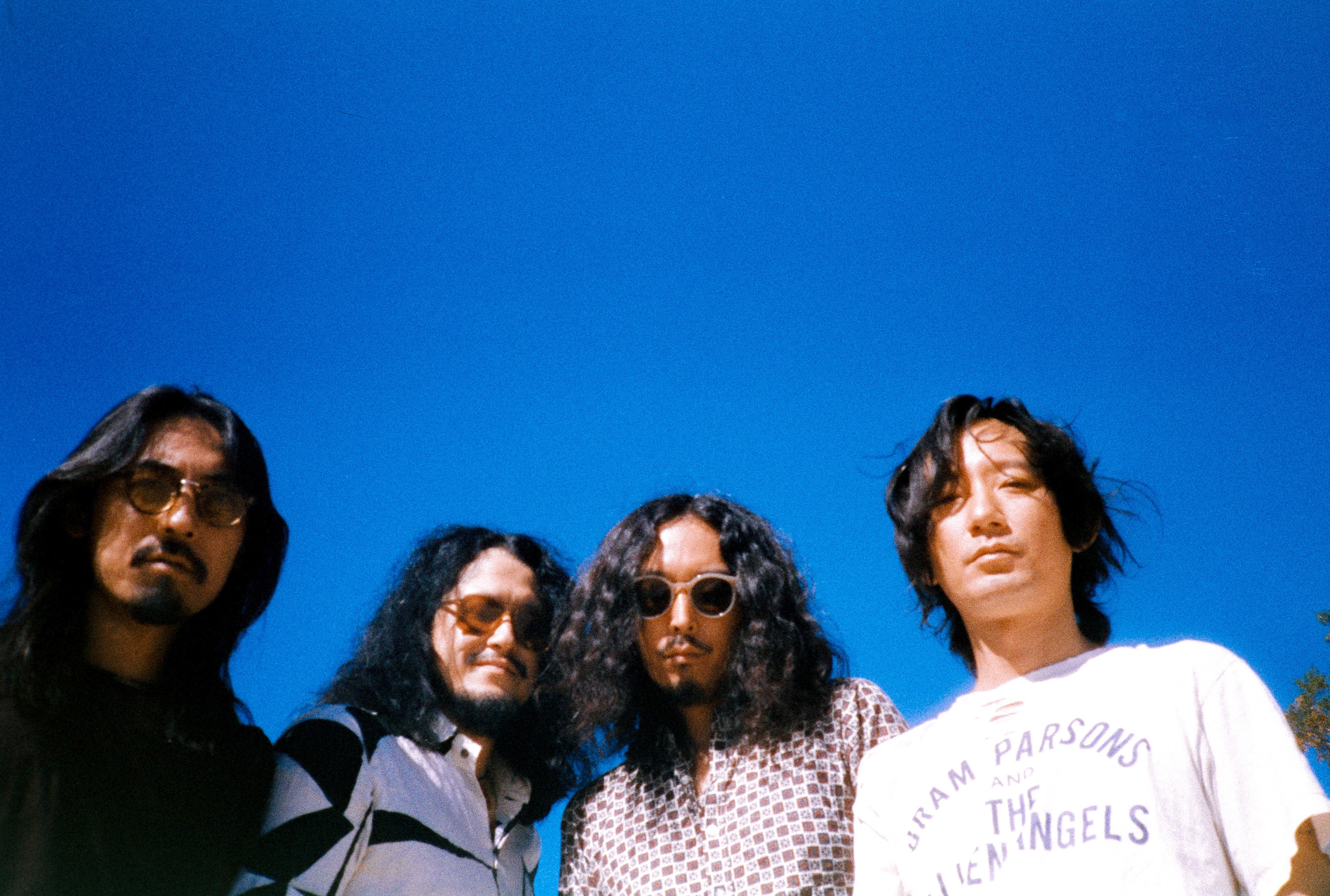
Minami Deutsch Interview— Could you tell us how the band members met?
There was an event called Tokyo Psych Fest that Kikagaku Moyo was running. It felt like we just connected through the people we met there.— There must be sounds that can't be reproduced live, but do you keep live performances in mind during the songwriting stage?
Not at all. That's why it's always hard work arranging things for the live shows.
— Could you tell us how your remix releases came about?
Initially, there’s this darkwave duo called The KVB, and it started when Kat asked if I'd like to try doing one.
We used to hang out occasionally in Berlin, so we knew each other. After that, we started getting offers from bands in Leipzig and São Paulo, so we've been doing them pretty steadily.
— What was it that attracted you to krautrock? Also, for people who have never listened to krautrock, could you share what makes this genre so interesting?
I had known about it since my teens, but back then it didn't really click with me. Later, after digging deeply into various kinds of music, I listened to it again and found it incredibly appealing.
In terms of what makes it interesting, I think there’s a whole gradation to it.
At first, it’s like realizing, "Oh, the chords don't even have to change."
There were many different bands in Germany back then, and while not all of them were the same, almost every band had that kind of vibe, which felt strange and intriguing.
The famous Kraftwerk was also a band of that era, and their early works are exactly like that.
If you study it a bit, you'll see that they were intentionally figuring out how to update rock music, which was born in the US and the UK, in their own way.
So there was definitely an experimental spirit, and looking at it from that perspective, you can see the roots of many musical genres that exist today.
Things called new age, ambient, psych, cosmic, as well as funk and electronic music.
Still, there’s a sense of whether something feels "kraut-like" or not; I feel anything that’s too ornate or dramatic isn't quite it.
I don't really like those kinds of things, so it suits me just right.
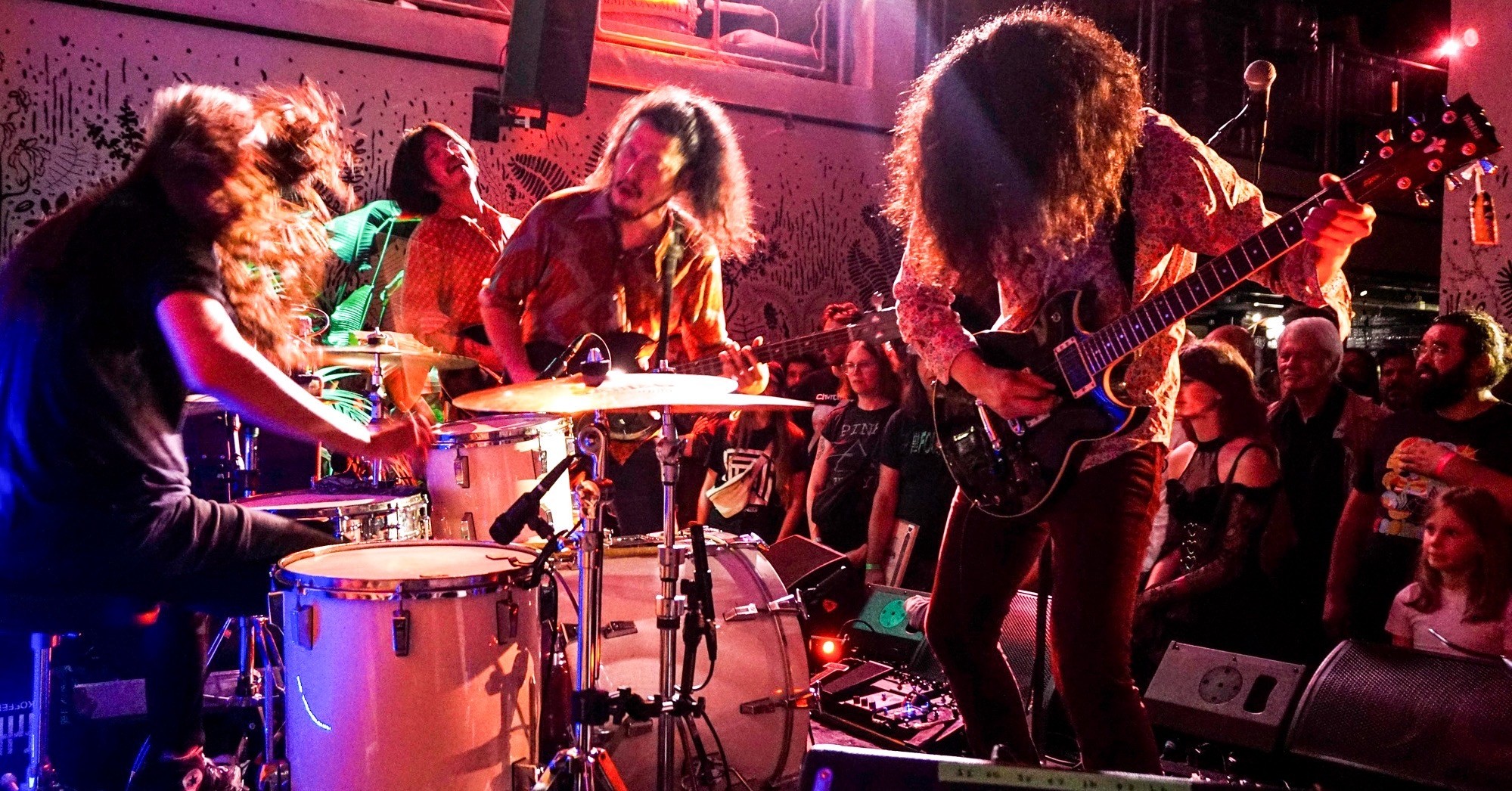
— Minami Deutsch has an impressive sound with tight yet psychedelic, playful tracks. What do you consider to be your weapon or individuality? Is there anything you're conscious of compared to other groups?
I usually love and listen to all kinds of music.
So, what we do is take krautrock as the core and try to see what new elements we can add. I think it comes down to whether that balance and taste resonate with people or not.
Since we call ourselves a krautrock band, I guess doing that was out of being conscious of other groups.
— When you include lyrics, is it because there's something you want to convey? Or do you see them as part of the "sound"?
I include lyrics because I think people are more likely to listen if there are words.
It seems like a lot of krautrock lovers just focus entirely on a single guitar, or lean into electronic music because there's no drummer, or don't sing because they're shy, or play as a duo because they don't have friends. I really dislike music with excuses like that, so I just wanted to do it properly.
— In "Your Pulse," the breathing-like sounds left quite an impression. Do you draw inspiration from daily life?
I was breathing like that on the first track of our first album, too. I like Prince, so it's just that kind of vibe.
— Where lies the difference between what comes out accidentally in a jam session versus what is built deliberately?
Just like your question says, I think the difference is whether it's accidental or deliberate, but it's great when something cool comes out of a jam.
Since I didn't consciously create it myself, it's full of unpredictable things, and that looks really appealing to me.
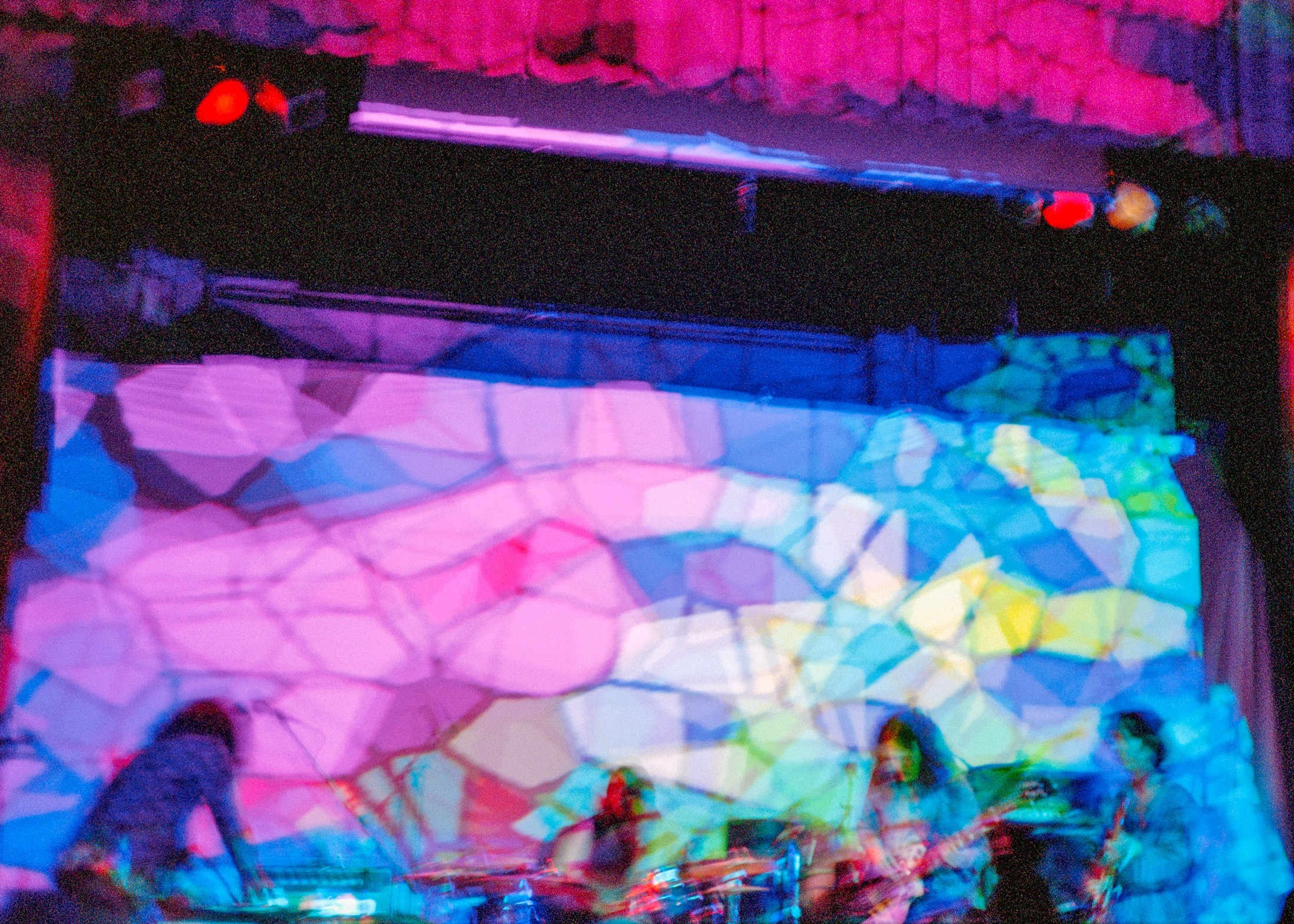
— Personally, I feel both comfort and anxiety in repetition. While there is a sense of not reaching a destination or of a story not starting, there is also a trance-like feeling. How do you view the effects and appeal of repetition?
Lately, it has moved beyond just feeling good; it has become something universal, as if there are no other options.
Also, I don't really like things that are dramatic.
Deep down, I actually like music that stirs emotions, but getting emotionally moved is exhausting.
Once a story begins, you need an introduction, development, twist, and conclusion. To me, that's much more tiring.
People talk about feeling anxiety, but you can always just stop it yourself.
If you get tired from dancing at a club, you step off the floor, right?
If you go watch an orchestra, isn't it much harder to just walk out?
— You have many psychedelic tracks; do you consciously incorporate ethnic or traditional folk music elements? Or did they emerge naturally through your experiments?
It's just that I listen to psych and come across those kinds of records, and since I like them, I think, "Let's try that out."
Plus, those elements exist within the context of krautrock as well.
— As you continue making "experimental music," do you ever feel a gap between your work and public reception? Also, have there been any unexpected discoveries on your part?
I don't think we're recognized at all.
Just gathering four Japanese people who love krautrock and being able to tour overseas—I think we deserve some praise just for that. (laughs)
— We heard that Kyotaro-san likes 70s soul and disco. Did that influence your decision to perform at "GROOVIN’" or affect your music production?
With GROOVIN’, we got the offer, and it sounded interesting because it brought together people who usually don't mix, and I felt a lot of passion from them, so that's why we took it.
I think it influences my production quite a bit. It might sound harsh, but I don't like non-funky, overly rushed beats.
So I edit them. Though sometimes that can be rocky and cool, too.
— Krautrock tends to have a relatively serious image, but you mentioned wanting to "value humor and looseness." Specifically, in what aspects?
I think that has to do with the audience and critics.
Because the bands back then just dressed normally like 70s West Coast bands, and at the very least, they didn't look like nerds.
Did I say something like that? Things like our Japanese song titles on the obi strips are like comedy improv. They have nothing to do with the English titles.
— Guruguru Brain is also home to Kikagaku Moyo and Maya Ongaku; do you stay conscious of each other?
With Kikagaku Moyo, I used to live with some of the members, so I suppose there was some awareness.
Maya belongs to a completely different generation, so my feeling is just that they should keep thriving and doing their thing.
— We heard that ACE GENERAL STORE has close ties with bands like Maya Ongaku on Guruguru Brain and HAPPY, who are performing this time. Despite being a clothing store, what do you think attracts these kinds of people there?
Isn't it simply about essential things like the store having cool interior design and playing good music?
And the books they have out. Through things like that, you can somehow grasp the shop's philosophy.
ACE GENERAL STORE↓
https://www.instagram.com/ace_general_store?stkn=MWI2MXh6a2d6ang4aQ%3D%3D
— Do you feel that the intersection of Japanese and German, or Eastern and Western sensibilities, brings uniqueness to your music?
I think it does. Just like not being able to speak natural English, I think it's something that always stays with you.
The environment and the way cities are built also have an impact. One thing I strongly felt when touring the US was how vastly wide everything is horizontally.
Maybe it's different in New York or right downtown, but going to another bar often means there's nothing in between.
It takes about 5 minutes by car. You need a car for everything, and houses and roads are large.
Tokyo is vertical. If there's an izakaya on one floor of a building, you turn around and there's a convenience store.
I think these environmental differences heavily affect ways of thinking and music.
So even if we play rock, to Westerners, it inevitably looks unique in some way.

— What do you think embodies the spirit of Minami Deutsch?
Being extremely particular about things, I suppose.
— You often perform overseas, but do you have any particular attachment to where you base your activities?
None. It's more like we've searched for and gone to places where there seems to be demand.
I think things will get even better if we increase opportunities to perform in Asia.
However, I feel the perception of rock is completely different between Asia and the West.
I think it takes time for heavy sounds or the spirit of rock to be truly understood.
Rock is about continuing to do what you love, right?
Considering its historical background, it also has political aspects.
It's hard to explain, but for example, in the West, airport security staff might have tattoos all the way up to their faces.
It means it's a society that accepts that. The ones creating those rules are, indirectly, the citizens.
In Japan, people tend to ostracize those who do things differently from others.
However, you could say that by doing so, people rob themselves of their own freedom and build a suffocating society.
You can't even dress how you want. Because of that, the jobs you can do might decrease drastically.
I don't think there's any room to play rock music under such conditions.
Still, if you can prepare instruments and an amplifier, you can do something similar.
Even if people sing about love in that state, I don't think that's what it's really about.
— This show is at club asia, a venue that also hosts DJ events, so the crowd might be a bit different from usual. You're also sharing the bill with HAPPY; what kind of show do you want to make it?
I hope we and HAPPY both put on great performances, and that the audience, who might be different from our usual crowd, gets to learn a bit about psych.
— Is there anything you'd like to try in your future activities?
Right now, we are working on a new Minami Deutsch album.
Also, I want to make an album compiling studio jams, so I'm digging through past recordings.
And, as I've been saying for about three years now, I'd like to release a disco record too.
Everything is taking time.
Also, my dream is to make an original shichimi togarashi (seven-spice blend).
— Are there any artists or works that have influenced your recent songwriting?
I don't think it influences my songwriting, but I've been getting into new age and ambient again.
Michael Stearns - Planetary Unfolding
Florian T M Zeisig - Music for Parents
Also, the 20th anniversary record from Umor Rex. The artwork is extremely cool.
https://umor-rex.com/
Recently, I played a B2B DJ set with an acquaintance in a Berlin park. He had a techno sensibility forged every weekend at Berghain and got into ambient through early-morning club electronic music,
whereas I love 60s and 70s new age, so our backgrounds are completely different.
And the way those intersected felt really great.
— Lastly, could you share a message for the youth who will lead the future?
Whatever the outcome may be, I think the important thing is to live without regrets.
Things will work out somehow.
Interview by Ryota Takahashi
Minami Deutsch
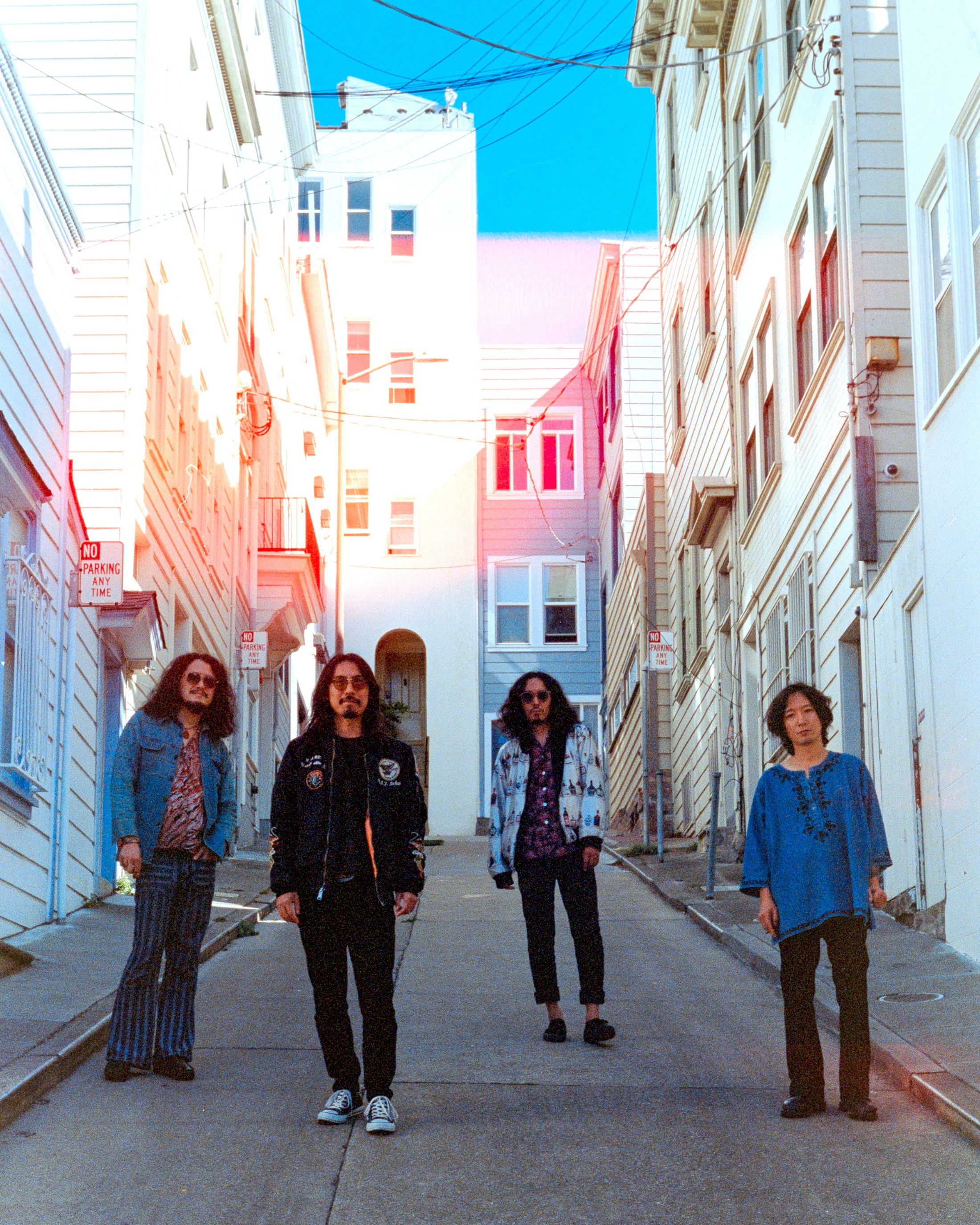
A krautrock band formed in Tokyo in 2014 around Kyotaro Miula.
Fusing repetitive beats, psychedelic guitars, and a propulsive energy akin to minimal techno, they update the experimental spirit of krautrock into a contemporary band sound.
To date, they have released numerous works through labels in Japan and abroad, including Guruguru Brain, a label run by members of Kikagaku Moyo. They have toured extensively across Europe, North America, Australia, and Asia, and appeared at various festivals worldwide, such as Roadburn Festival, Levitation, Meredith Music Festival, Desertfest, and Fuzz Club Fest.
They have also drawn acclaim for performing with CAN's former vocalist Damo Suzuki and touring with Earthless and Blood Incantation, as well as playing Tokyo shows with OGRE YOU ASSHOLE and Otoboke Beaver.
Continuing their activities around the world, they make krautrock in the present tense.
Photo by Tyler Loring
————————————————————————————-
STACK Interview
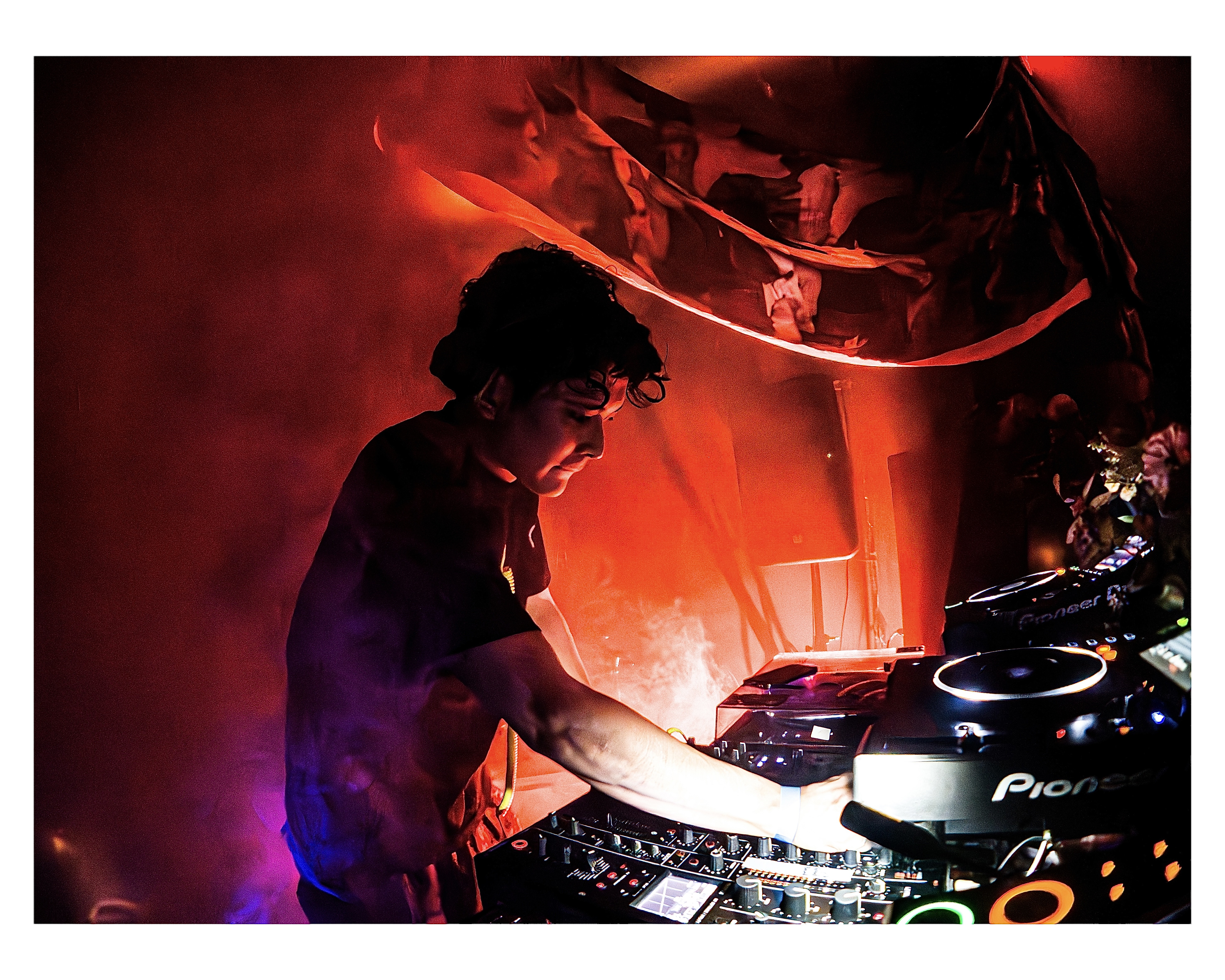
— How did you start DJing?
When I was in junior high, I loved Marshmello so much and vaguely thought about wanting to DJ someday.
Around that time, a friend I used to skateboard with was DJing, and having them teach me was the catalyst to getting started.
— What are the commonalities between skateboarding and DJing, and how has it influenced your DJing?
Skateboarding and DJing are both a battle against yourself! Or rather, they're similar in how you quietly hone your skills on your own, and I really love that.
When I skate, I want to DJ, and when I DJ, I want to skate, so it's a perpetual motion machine.
Also, meeting people on the street or in clubs and expanding your circle of friends is something both have in common.
Sometimes there are days where the venue is filled with only friends, which is the best!
— What do you keep in mind when mixing?
I focus on creating progression as a DJ. After hyping up the floor with uptempo tracks, I drop the tempo slightly to build tension, and then build it back up from there.
While alternating between highs and lows like that, I strive for a mix that tells a story.
— What makes music "good music"?
Music is subjective in the end, so I don't think there's any absolute good or bad.
I like songs that make you want to dance, and I also like songs that make you want to sit and listen intently.
If someone listens to it and thinks it's good, then that's good music to them, I think.
— What music have you been listening to lately?
Lately, I've been listening to a lot of bands: Odotte Bakari no Kuni, maya ongaku, Minami Deutsch, and others.
I also like The Beatles, rap, dub, and recently I've been exploring dancehall a bit.
I like all kinds of things regardless of genre.
— Are there any artists or DJs that have caught your attention recently?
As for artists, Maya Ongaku. I watched a live video at a friend's place and was totally blown away.
The way the sounds layer on top of each other and spread out is so cool!
I'm looking forward to going to their show next month.
For DJs, Lil Mofo, whom I heard recently!
It's been a long time since I was so captivated that I couldn't move from where I stood, and it made me think, "I need to practice DJing more!" It was an edgy, amazing DJ set like I haven't heard in a while.
— What inspired you to start GROOVIN’?
I've always loved bands, too, and wanted to organize an event where people could enjoy not just DJs, but live performances as well.
Sometimes when I go to live shows during the day, I find myself thinking, "I want to get completely wasted and dance without caring what anyone thinks!" So I thought it'd be fun to have an all-night festival-like event where people could enjoy both DJs and live acts, and that's how GROOVIN’ began.
The ideal is, above all, a party where I can dance the most.
— What direction is GROOVIN’ aiming for?
I feel that in the current scene, dance music itself sometimes takes precedence over everything else.
That's why I want to involve various cultures—skateboarding, art, and food like Tacos 3 Hermanos this time—to create an entry point that sparks interest even for people who have never been to a club.
I want to keep bringing in whatever things I genuinely think are great.
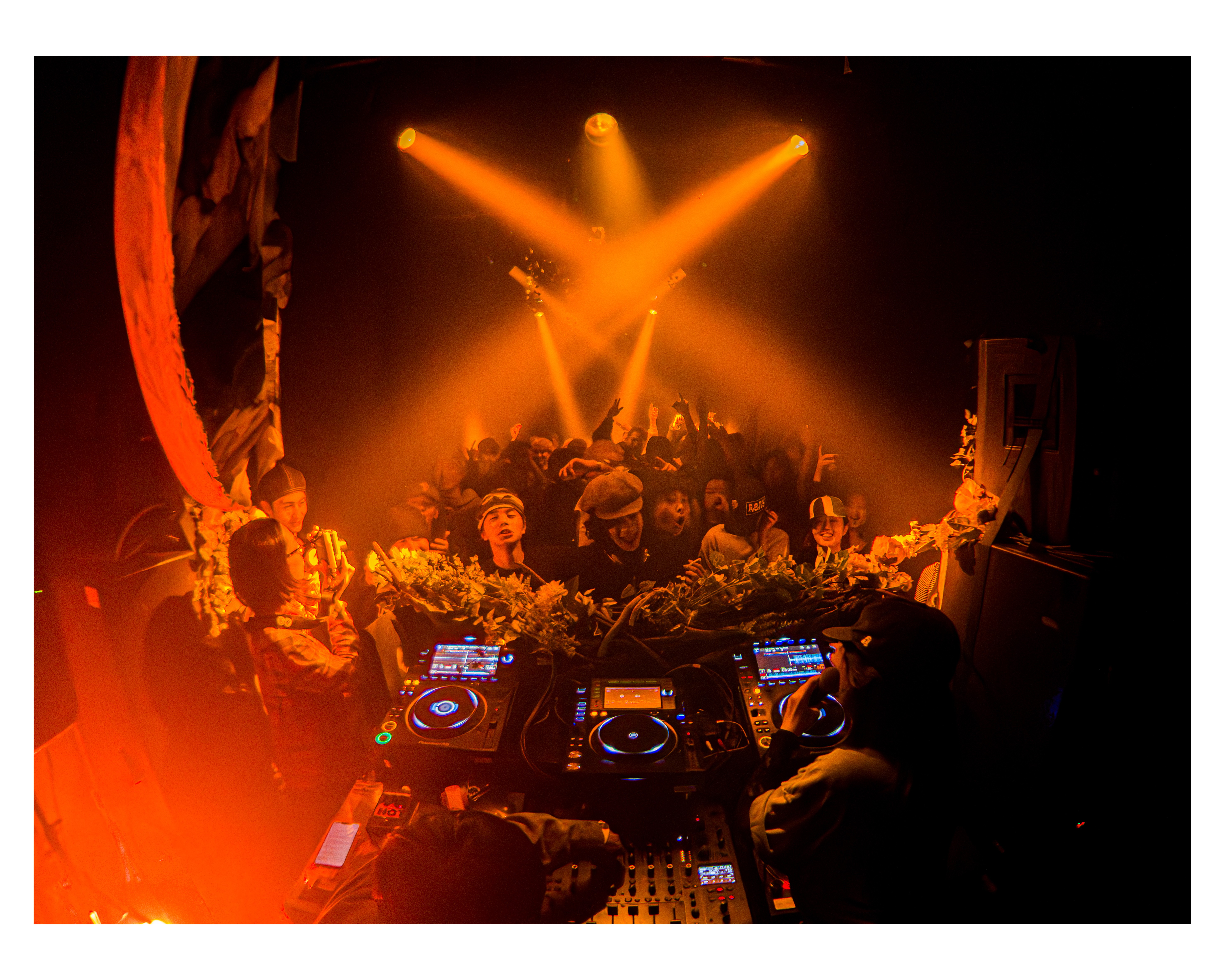
— How do dance floors overseas differ from Japan, and what are your thoughts on the Japanese club scene?
I feel the floor atmosphere and the crowd are completely different in Korea and Thailand.
Korea has the best vibes!
There's a culture of enjoying alcohol, and people actively dance and hype things up without worrying about those around them. Even the flashier commercial clubs were popping off.
In Thailand, compared to Korea, it feels like there are more travelers from Europe and the US rather than just younger locals.
Still, everyone is used to dancing, and the floor heats up with a great vibe.
— As you become active outside of Japan, are there new discoveries or inspirations you've gained?
I truly feel that Japan has an incredible history. I want to carry forward what our predecessors built!
Being Japanese, I realize I'm DJing in a very privileged environment.
— When you first met at club asia, you were both in the audience, but this time you are hosting the event as the organizer. How do you feel right now?
I'm so excited for the 16th.
It's a dream come true!
I'd be thrilled if this edition of GROOVIN’ makes someone feel the way I did back then.
— It’s a large venue with multiple floors; what is unique about it, and what are you mindful of?
Ever since I used to go there to hang out, club asia has always had this image of being a chaotic place where diverse cultures collide.
I feel like this GROOVIN’ can create a new kind of chaos, and I'm super excited about it.
— Minami Deutsch, HAPPY, and Dongurizu will be performing. What kind of space do you want to create for an event where live acts and DJs coexist?
Drinking, chatting, dancing...
I want to make it a space where everyone can enjoy themselves freely.
By having bands with psychedelic elements coexist with DJs, I hope to create a place that resonates with all kinds of people and makes everyone happy.
— The audience will probably be different from both standard DJ events and standard live gigs. What kind of event do you hope to achieve this time?
Rather than focusing on demographics, it would be amazing if genuine frenzy is created!
Combining the best parts of live acts and DJs, with this specific lineup brought together at this very moment in time, I think something special will emerge.
I personally have a strong desire to see that happen, too.
— Tell us about your future goals or things you'd like to challenge yourself with.
Aside from outdoor events, I'd love to take on unusual venues like building rooftops or shut-down highways!
I want to pursue interesting events that only I can pull off! Oss🥋‼️
Interview by Ryota Takahashi
STACK

Tokyo-based DJ / Skater / Organizer
Centered around house music, he constructs a unique worldview with grooves that intertwine disco and organic live instrumentation.
His soundscapes, steeped in euphoria and subtle intoxication, dissolve the sense of time and guide the dance floor into an extraordinary dimension.
To date, he has organized "KILIMANJARO" and "GROOVIN'" at ENTER, Circus Tokyo, and SALOON. Internationally, he continues to expand his presence across Asia, including performances in Seoul (ARGA, Paper) and Thailand (12x12, EP).
STACK, along with his friends, started "GROOVIN’" around music and skateboarding. To mark its second anniversary, an Anniversary Party is being held at club asia.
Music, skateboarding, food, and art.
Though the forms may differ, what is present there are things each person has seriously engaged with and nurtured.
The moment when that heat passes from person to person, giving rise to unexpected encounters and scenes, is what we want to call GROOVE.
Making their long-awaited appearance this time is the Tokyo-based four-piece band, Minami Deutsch.
Krautrock emerged from the German underground scene of the 1970s. Carrying that experimental spirit and sound into the modern era, it embodies the aesthetics of electronic music pioneered by Kraftwerk, as well as the repetitive grooves passed down from disco to techno.
With enduring beats and psychedelic guitars at its core, Minami Deutsch has created a sound that crosses the boundaries between rock and club music.
At this edition of GROOVIN’, their repetitive sound and sustained grooves are bound to shake the floor of club asia, pulling the audience into a whirlwind of euphoria.
In this article, we also conducted advance email interviews with Minami Deutsch and STACK.
Minami Deutsch Interview— Could you tell us how the band members met?
There was an event called Tokyo Psych Fest that Kikagaku Moyo was running. It felt like we just connected through the people we met there.— There must be sounds that can't be reproduced live, but do you keep live performances in mind during the songwriting stage?
Not at all. That's why it's always hard work arranging things for the live shows.
— Could you tell us how your remix releases came about?
Initially, there’s this darkwave duo called The KVB, and it started when Kat asked if I'd like to try doing one.
We used to hang out occasionally in Berlin, so we knew each other. After that, we started getting offers from bands in Leipzig and São Paulo, so we've been doing them pretty steadily.
— What was it that attracted you to krautrock? Also, for people who have never listened to krautrock, could you share what makes this genre so interesting?
I had known about it since my teens, but back then it didn't really click with me. Later, after digging deeply into various kinds of music, I listened to it again and found it incredibly appealing.
In terms of what makes it interesting, I think there’s a whole gradation to it.
At first, it’s like realizing, "Oh, the chords don't even have to change."
There were many different bands in Germany back then, and while not all of them were the same, almost every band had that kind of vibe, which felt strange and intriguing.
The famous Kraftwerk was also a band of that era, and their early works are exactly like that.
If you study it a bit, you'll see that they were intentionally figuring out how to update rock music, which was born in the US and the UK, in their own way.
So there was definitely an experimental spirit, and looking at it from that perspective, you can see the roots of many musical genres that exist today.
Things called new age, ambient, psych, cosmic, as well as funk and electronic music.
Still, there’s a sense of whether something feels "kraut-like" or not; I feel anything that’s too ornate or dramatic isn't quite it.
I don't really like those kinds of things, so it suits me just right.
— Minami Deutsch has an impressive sound with tight yet psychedelic, playful tracks. What do you consider to be your weapon or individuality? Is there anything you're conscious of compared to other groups?
I usually love and listen to all kinds of music.
So, what we do is take krautrock as the core and try to see what new elements we can add. I think it comes down to whether that balance and taste resonate with people or not.
Since we call ourselves a krautrock band, I guess doing that was out of being conscious of other groups.
— When you include lyrics, is it because there's something you want to convey? Or do you see them as part of the "sound"?
I include lyrics because I think people are more likely to listen if there are words.
It seems like a lot of krautrock lovers just focus entirely on a single guitar, or lean into electronic music because there's no drummer, or don't sing because they're shy, or play as a duo because they don't have friends. I really dislike music with excuses like that, so I just wanted to do it properly.
— In "Your Pulse," the breathing-like sounds left quite an impression. Do you draw inspiration from daily life?
I was breathing like that on the first track of our first album, too. I like Prince, so it's just that kind of vibe.
— Where lies the difference between what comes out accidentally in a jam session versus what is built deliberately?
Just like your question says, I think the difference is whether it's accidental or deliberate, but it's great when something cool comes out of a jam.
Since I didn't consciously create it myself, it's full of unpredictable things, and that looks really appealing to me.
— Personally, I feel both comfort and anxiety in repetition. While there is a sense of not reaching a destination or of a story not starting, there is also a trance-like feeling. How do you view the effects and appeal of repetition?
Lately, it has moved beyond just feeling good; it has become something universal, as if there are no other options.
Also, I don't really like things that are dramatic.
Deep down, I actually like music that stirs emotions, but getting emotionally moved is exhausting.
Once a story begins, you need an introduction, development, twist, and conclusion. To me, that's much more tiring.
People talk about feeling anxiety, but you can always just stop it yourself.
If you get tired from dancing at a club, you step off the floor, right?
If you go watch an orchestra, isn't it much harder to just walk out?
— You have many psychedelic tracks; do you consciously incorporate ethnic or traditional folk music elements? Or did they emerge naturally through your experiments?
It's just that I listen to psych and come across those kinds of records, and since I like them, I think, "Let's try that out."
Plus, those elements exist within the context of krautrock as well.
— As you continue making "experimental music," do you ever feel a gap between your work and public reception? Also, have there been any unexpected discoveries on your part?
I don't think we're recognized at all.
Just gathering four Japanese people who love krautrock and being able to tour overseas—I think we deserve some praise just for that. (laughs)
— We heard that Kyotaro-san likes 70s soul and disco. Did that influence your decision to perform at "GROOVIN’" or affect your music production?
With GROOVIN’, we got the offer, and it sounded interesting because it brought together people who usually don't mix, and I felt a lot of passion from them, so that's why we took it.
I think it influences my production quite a bit. It might sound harsh, but I don't like non-funky, overly rushed beats.
So I edit them. Though sometimes that can be rocky and cool, too.
— Krautrock tends to have a relatively serious image, but you mentioned wanting to "value humor and looseness." Specifically, in what aspects?
I think that has to do with the audience and critics.
Because the bands back then just dressed normally like 70s West Coast bands, and at the very least, they didn't look like nerds.
Did I say something like that? Things like our Japanese song titles on the obi strips are like comedy improv. They have nothing to do with the English titles.
— Guruguru Brain is also home to Kikagaku Moyo and Maya Ongaku; do you stay conscious of each other?
With Kikagaku Moyo, I used to live with some of the members, so I suppose there was some awareness.
Maya belongs to a completely different generation, so my feeling is just that they should keep thriving and doing their thing.
— We heard that ACE GENERAL STORE has close ties with bands like Maya Ongaku on Guruguru Brain and HAPPY, who are performing this time. Despite being a clothing store, what do you think attracts these kinds of people there?
Isn't it simply about essential things like the store having cool interior design and playing good music?
And the books they have out. Through things like that, you can somehow grasp the shop's philosophy.
ACE GENERAL STORE↓
https://www.instagram.com/ace_general_store?stkn=MWI2MXh6a2d6ang4aQ%3D%3D
— Do you feel that the intersection of Japanese and German, or Eastern and Western sensibilities, brings uniqueness to your music?
I think it does. Just like not being able to speak natural English, I think it's something that always stays with you.
The environment and the way cities are built also have an impact. One thing I strongly felt when touring the US was how vastly wide everything is horizontally.
Maybe it's different in New York or right downtown, but going to another bar often means there's nothing in between.
It takes about 5 minutes by car. You need a car for everything, and houses and roads are large.
Tokyo is vertical. If there's an izakaya on one floor of a building, you turn around and there's a convenience store.
I think these environmental differences heavily affect ways of thinking and music.
So even if we play rock, to Westerners, it inevitably looks unique in some way.
— What do you think embodies the spirit of Minami Deutsch?
Being extremely particular about things, I suppose.
— You often perform overseas, but do you have any particular attachment to where you base your activities?
None. It's more like we've searched for and gone to places where there seems to be demand.
I think things will get even better if we increase opportunities to perform in Asia.
However, I feel the perception of rock is completely different between Asia and the West.
I think it takes time for heavy sounds or the spirit of rock to be truly understood.
Rock is about continuing to do what you love, right?
Considering its historical background, it also has political aspects.
It's hard to explain, but for example, in the West, airport security staff might have tattoos all the way up to their faces.
It means it's a society that accepts that. The ones creating those rules are, indirectly, the citizens.
In Japan, people tend to ostracize those who do things differently from others.
However, you could say that by doing so, people rob themselves of their own freedom and build a suffocating society.
You can't even dress how you want. Because of that, the jobs you can do might decrease drastically.
I don't think there's any room to play rock music under such conditions.
Still, if you can prepare instruments and an amplifier, you can do something similar.
Even if people sing about love in that state, I don't think that's what it's really about.
— This show is at club asia, a venue that also hosts DJ events, so the crowd might be a bit different from usual. You're also sharing the bill with HAPPY; what kind of show do you want to make it?
I hope we and HAPPY both put on great performances, and that the audience, who might be different from our usual crowd, gets to learn a bit about psych.
— Is there anything you'd like to try in your future activities?
Right now, we are working on a new Minami Deutsch album.
Also, I want to make an album compiling studio jams, so I'm digging through past recordings.
And, as I've been saying for about three years now, I'd like to release a disco record too.
Everything is taking time.
Also, my dream is to make an original shichimi togarashi (seven-spice blend).
— Are there any artists or works that have influenced your recent songwriting?
I don't think it influences my songwriting, but I've been getting into new age and ambient again.
Michael Stearns - Planetary Unfolding
Florian T M Zeisig - Music for Parents
Also, the 20th anniversary record from Umor Rex. The artwork is extremely cool.
https://umor-rex.com/
Recently, I played a B2B DJ set with an acquaintance in a Berlin park. He had a techno sensibility forged every weekend at Berghain and got into ambient through early-morning club electronic music,
whereas I love 60s and 70s new age, so our backgrounds are completely different.
And the way those intersected felt really great.
— Lastly, could you share a message for the youth who will lead the future?
Whatever the outcome may be, I think the important thing is to live without regrets.
Things will work out somehow.
Interview by Ryota Takahashi
Minami Deutsch
A krautrock band formed in Tokyo in 2014 around Kyotaro Miula.
Fusing repetitive beats, psychedelic guitars, and a propulsive energy akin to minimal techno, they update the experimental spirit of krautrock into a contemporary band sound.
To date, they have released numerous works through labels in Japan and abroad, including Guruguru Brain, a label run by members of Kikagaku Moyo. They have toured extensively across Europe, North America, Australia, and Asia, and appeared at various festivals worldwide, such as Roadburn Festival, Levitation, Meredith Music Festival, Desertfest, and Fuzz Club Fest.
They have also drawn acclaim for performing with CAN's former vocalist Damo Suzuki and touring with Earthless and Blood Incantation, as well as playing Tokyo shows with OGRE YOU ASSHOLE and Otoboke Beaver.
Continuing their activities around the world, they make krautrock in the present tense.
Photo by Tyler Loring
————————————————————————————-
STACK Interview
— How did you start DJing?
When I was in junior high, I loved Marshmello so much and vaguely thought about wanting to DJ someday.
Around that time, a friend I used to skateboard with was DJing, and having them teach me was the catalyst to getting started.
— What are the commonalities between skateboarding and DJing, and how has it influenced your DJing?
Skateboarding and DJing are both a battle against yourself! Or rather, they're similar in how you quietly hone your skills on your own, and I really love that.
When I skate, I want to DJ, and when I DJ, I want to skate, so it's a perpetual motion machine.
Also, meeting people on the street or in clubs and expanding your circle of friends is something both have in common.
Sometimes there are days where the venue is filled with only friends, which is the best!
— What do you keep in mind when mixing?
I focus on creating progression as a DJ. After hyping up the floor with uptempo tracks, I drop the tempo slightly to build tension, and then build it back up from there.
While alternating between highs and lows like that, I strive for a mix that tells a story.
— What makes music "good music"?
Music is subjective in the end, so I don't think there's any absolute good or bad.
I like songs that make you want to dance, and I also like songs that make you want to sit and listen intently.
If someone listens to it and thinks it's good, then that's good music to them, I think.
— What music have you been listening to lately?
Lately, I've been listening to a lot of bands: Odotte Bakari no Kuni, maya ongaku, Minami Deutsch, and others.
I also like The Beatles, rap, dub, and recently I've been exploring dancehall a bit.
I like all kinds of things regardless of genre.
— Are there any artists or DJs that have caught your attention recently?
As for artists, Maya Ongaku. I watched a live video at a friend's place and was totally blown away.
The way the sounds layer on top of each other and spread out is so cool!
I'm looking forward to going to their show next month.
For DJs, Lil Mofo, whom I heard recently!
It's been a long time since I was so captivated that I couldn't move from where I stood, and it made me think, "I need to practice DJing more!" It was an edgy, amazing DJ set like I haven't heard in a while.
— What inspired you to start GROOVIN’?
I've always loved bands, too, and wanted to organize an event where people could enjoy not just DJs, but live performances as well.
Sometimes when I go to live shows during the day, I find myself thinking, "I want to get completely wasted and dance without caring what anyone thinks!" So I thought it'd be fun to have an all-night festival-like event where people could enjoy both DJs and live acts, and that's how GROOVIN’ began.
The ideal is, above all, a party where I can dance the most.
— What direction is GROOVIN’ aiming for?
I feel that in the current scene, dance music itself sometimes takes precedence over everything else.
That's why I want to involve various cultures—skateboarding, art, and food like Tacos 3 Hermanos this time—to create an entry point that sparks interest even for people who have never been to a club.
I want to keep bringing in whatever things I genuinely think are great.
— How do dance floors overseas differ from Japan, and what are your thoughts on the Japanese club scene?
I feel the floor atmosphere and the crowd are completely different in Korea and Thailand.
Korea has the best vibes!
There's a culture of enjoying alcohol, and people actively dance and hype things up without worrying about those around them. Even the flashier commercial clubs were popping off.
In Thailand, compared to Korea, it feels like there are more travelers from Europe and the US rather than just younger locals.
Still, everyone is used to dancing, and the floor heats up with a great vibe.
— As you become active outside of Japan, are there new discoveries or inspirations you've gained?
I truly feel that Japan has an incredible history. I want to carry forward what our predecessors built!
Being Japanese, I realize I'm DJing in a very privileged environment.
— When you first met at club asia, you were both in the audience, but this time you are hosting the event as the organizer. How do you feel right now?
I'm so excited for the 16th.
It's a dream come true!
I'd be thrilled if this edition of GROOVIN’ makes someone feel the way I did back then.
— It’s a large venue with multiple floors; what is unique about it, and what are you mindful of?
Ever since I used to go there to hang out, club asia has always had this image of being a chaotic place where diverse cultures collide.
I feel like this GROOVIN’ can create a new kind of chaos, and I'm super excited about it.
— Minami Deutsch, HAPPY, and Dongurizu will be performing. What kind of space do you want to create for an event where live acts and DJs coexist?
Drinking, chatting, dancing...
I want to make it a space where everyone can enjoy themselves freely.
By having bands with psychedelic elements coexist with DJs, I hope to create a place that resonates with all kinds of people and makes everyone happy.
— The audience will probably be different from both standard DJ events and standard live gigs. What kind of event do you hope to achieve this time?
Rather than focusing on demographics, it would be amazing if genuine frenzy is created!
Combining the best parts of live acts and DJs, with this specific lineup brought together at this very moment in time, I think something special will emerge.
I personally have a strong desire to see that happen, too.
— Tell us about your future goals or things you'd like to challenge yourself with.
Aside from outdoor events, I'd love to take on unusual venues like building rooftops or shut-down highways!
I want to pursue interesting events that only I can pull off! Oss🥋‼️
Interview by Ryota Takahashi
STACK
Tokyo-based DJ / Skater / Organizer
Centered around house music, he constructs a unique worldview with grooves that intertwine disco and organic live instrumentation.
His soundscapes, steeped in euphoria and subtle intoxication, dissolve the sense of time and guide the dance floor into an extraordinary dimension.
To date, he has organized "KILIMANJARO" and "GROOVIN'" at ENTER, Circus Tokyo, and SALOON. Internationally, he continues to expand his presence across Asia, including performances in Seoul (ARGA, Paper) and Thailand (12x12, EP).




Contact
Venue materials/inquiries regarding stage production, sound, and lighting
Inquiry about sound and lighting|stage@clubasia.jp
Inquiry about visual media|visual@clubasia.jp


Contact
Venue materials/inquiries regarding stage production, sound, and lighting
Inquiry about sound and lighting|stage@clubasia.jp
Inquiry about visual media|visual@clubasia.jp
Contact
Venue materials/inquiries regarding stage production, sound, and lighting
Inquiry about sound and lighting|stage@clubasia.jp
Inquiry about visual media|visual@clubasia.jp